

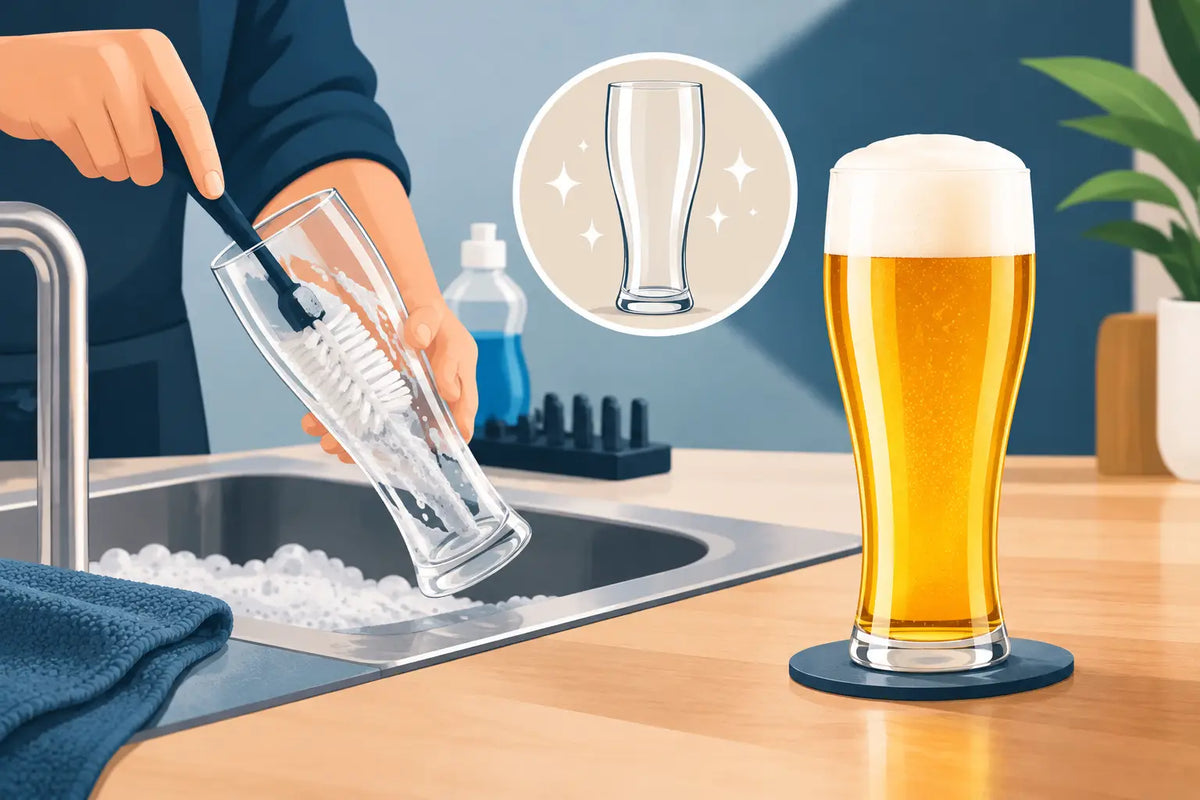
A beer glass is only clean when it's grease-free. Rinse it immediately after use, brush it with lukewarm to warm water using a brush reserved exclusively for glasses, rinse with cold water, and leave it upside down to drain on a rack. You don't need dish soap for normal soiling, and it's best to avoid rinse aid altogether with beer glasses.
That may sound strict, but the reason is simple: an invisible film of grease on the inside makes the head collapse within a minute. Read on to find out how to prevent that film, what can go wrong in the dishwasher, how to remove buildup and beer odors, and how to test in ten seconds whether a glass is truly clean.
Why a clean beer glass makes such a difference
A beer glass can look clear and still contain residue. Grease, dish soap, rinse aid, lip balm, and dried beer residue combine to form a thin film on the inside. That film is particularly harmful to the foam: carbon dioxide doesn't cling to the glass as well, causing the head to collapse quickly or become uneven.
Odor matters too. A glass that still smells of the dishwasher, the kitchen cupboard, or the previous beer affects the first sip. This is especially noticeable with crisp pilsner, hoppy IPA, and refined Belgian beers, where aroma contributes greatly to the flavor.
For hospitality businesses, this is part of the presentation. A perfectly poured beer in a glass with soap residue or a collapsing head detracts from the whole experience. The same applies at home, just on a smaller scale. If you've just taken the trouble to pour properly, you don't want to spoil it with an unclean glass.
The best method, step by step
Rinse the glass immediately after use, especially if it will be left standing for a while. Dried foam and beer residue are harder to remove and leave behind odors that are then almost impossible to get rid of.
Fill a clean sink with warm water and use a soft glass brush reserved exclusively for glasses. A dish brush also used on pans and casserole dishes absorbs grease and transfers it to your beer glass, which is exactly what you want to avoid. The glass brushes collection includes models designed specifically for this job, including the standing versions you can secure behind the bar.
Move the glass gently over the brush, inside and out. Pay attention to the base and rim, but don't force it. Especially thin, elegant glasses for wheat beer, tripel, or IPA call for a light touch. Then rinse thoroughly with clean, cold water. This final rinse removes any loose residue and leaves the glass cool and fresh.
Let the glass drain on a clean rack. Place it upside down, but make sure the rim doesn’t rest on a damp surface for too long and that air can circulate around it. Drying it with a dish towel is less suitable: even a clean towel leaves lint, fibers, or a light greasy film.
To use dish soap or not?
You don’t need it for normal cleaning. Many dishwashing liquids are designed to cut through grease and contain fragrances or conditioning ingredients. Great for dishes, but not for a stable head of foam.
Is a glass visibly greasy or has it been sitting unused for a long time? Use a small amount of mild, unscented detergent and rinse extra thoroughly. It’s better to rinse once too many than once too few, and give the glass a quick sniff afterward. If it has no smell, you’re all set.
Beer glasses in the dishwasher
The dishwasher is handy when you use a lot of glasses, but it requires care. Not every beer glass is suitable for it, and not every cycle leaves a glass truly clean enough for beer.
First check the manufacturer’s recommendations. Many quality glasses are dishwasher-safe, but printed designs, gold rims, and special finishes are more delicate. Place the glasses securely in the upper rack with space between them, so they don’t knock against each other and water can reach every surface.
Choose a cycle with sufficient rinsing power and use dishwasher detergent sparingly. Skip rinse aid if you notice the head disappearing faster: it leaves a coating that repels water droplets, but also affects foam formation. It can be useful for sparkling-clean wine glasses; with beer glasses, it’s wiser to use it sparingly.
Take the glasses out promptly. Leaving them wet for too long in a closed, warm machine creates a musty smell that you can’t get rid of with a single rinse. Then let them dry completely before putting them in the cupboard.
Stubborn residue and beer odors
Do you see a cloudy film, or does a clean glass still not smell fresh? Then it needs a thorough cleaning. Limescale forms mainly in areas with hard water and is recognizable by its milky sheen. A short treatment with water and a splash of white vinegar usually helps. Rinse very carefully afterward so no sour smell or taste remains.
For old beer odors, soaking in warm water works better than vigorous scrubbing. Then brush the glass and rinse it thoroughly. If it remains cloudy, scratched, or still smells, replacing it is the wisest choice. Especially behind the bar, a fresh, presentable glass isn’t a minor detail but part of what you serve, and in the beer glasses collection, you’ll find models that can stand up to daily use.
How to test whether a glass is really clean
The water test takes ten seconds. Rinse the glass with cold water and look at the inside. If the water runs off the glass as an even film, it’s grease-free. If it forms separate droplets, streaks, or bare patches, there’s still grease or cleaning residue on it.
You can see the foam test while drinking. If the foam leaves rings along the inside as the glass empties, the glass was clean. Beer lovers call these rings Brussels lace. It’s not a laboratory test, but it is the quickest way to tell at the table or behind the bar.
Storing glasses without dust, odors, or damage
Store beer glasses upright in a dry cupboard. This prevents musty air from lingering in the bowl and protects the delicate rim. If the cupboard is dusty or you rarely use certain glasses, give them a quick rinse before pouring.
Keep beer glasses away from cleaning products and strongly scented items. Glass itself barely absorbs odors, but a closed cupboard with dust in it can. It’s also helpful to have a different shape for different beer styles: a slender glass from the pilsner glasses collection for a classic lager, a tulip glass from the specialty beer glasses collection for aromatic beers, and a roomy beer mug for wheat beer or a long evening. Read our article on buying beer glasses to find out which shape goes with which beer.
Keeping a beer glass clean doesn’t require a complicated routine, just attention to detail. Rinse it immediately, use a brush only for glasses, go easy on cleaning products, and rinse thoroughly. That way, your glassware stays in good shape longer, and every freshly poured beer gets the head it deserves.
Frequently asked questions
Why does my beer head collapse so quickly?
Nine times out of ten, there’s a thin film of grease or rinse aid residue on the inside. This prevents the carbonation from clinging properly, and the head disappears within a minute. Rinse the glass with cold water before pouring, and use the water test to check that it’s truly grease-free.
Can you use dish soap on a beer glass?
For normal soiling, it isn’t necessary and can even work against you, because fragrances and conditioning agents are left behind. If a glass is visibly greasy, use a small amount of mild, unscented detergent, then rinse it extra thoroughly with clean water.
Can you put beer glasses in the dishwasher?
Usually, yes, as long as the glass is dishwasher-safe and you leave space between the glasses. Use dishwasher detergent sparingly, preferably skip the rinse aid, and remove the glasses promptly when the cycle ends, since leaving them in a warm machine while wet can cause a musty smell.







Leave a comment
This site is protected by hCaptcha and the hCaptcha Privacy Policy and Terms of Service apply.