

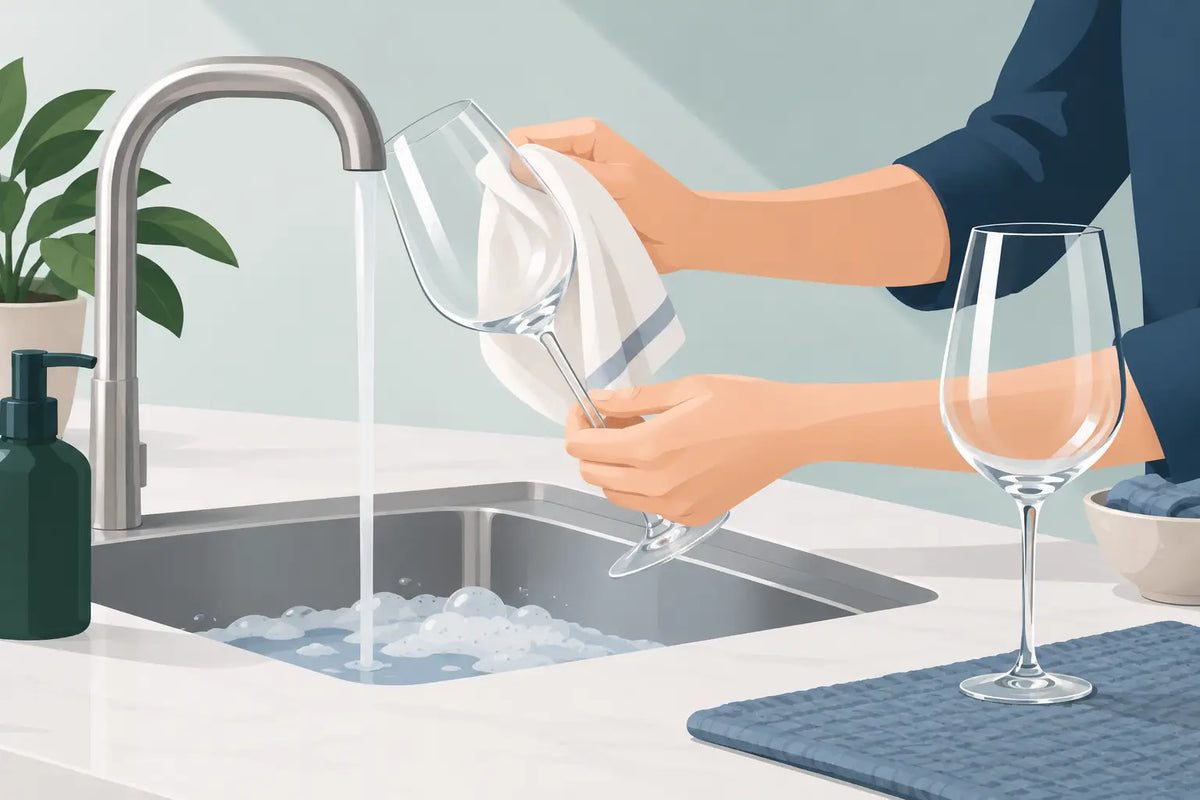
A good wine glass lets color, aroma, and flavor speak. That's exactly why it deserves more attention than a quick rinse under the tap. Hand-washing wine glasses is the safest way to keep delicate stems, fine rims, and clear bowls looking beautiful. With the right water temperature and a gentle touch, you can prevent limescale, greasy marks, and that familiar cloudy film.
Why hand-wash a wine glass?
A dishwasher is practical, especially after an elaborate dinner or a busy service. Still, the combination of high temperatures, powerful detergent, and glasses packed close together can leave marks over time. Think cloudy residue, tiny scratches, or a break at the stem. For fine crystal glasses, mouth-blown models, and decorated glasses, hand-washing is often the wisest choice.
Smell matters, too. A glass that still carries a trace of dishwasher detergent or an old kitchen towel does nothing good for a crisp Sauvignon Blanc or a full-bodied red wine. Hand-washing gives you control: you can feel whether the glass is really clean and check each glass before putting it back in the cupboard.
That doesn't mean every wine glass must never go in the dishwasher. Many modern wine glasses are dishwasher-safe. For everyday use, that can work just fine, as long as you choose a suitable cycle. Have a special glass for a lovely dinner, a gift, or a professional presentation? Then hand-washing remains the most careful choice.
How to hand-wash wine glasses in 6 gentle steps
Don't start with a full sink of hot water. Wine glasses don't like big temperature changes. Let glasses that have just come from a cold place or still contain cold wine warm up a little first. Don't rinse away red wine residue with boiling water either: it can make the stains stick.
1. Rinse away wine residue immediately
Rinse the glass with lukewarm water after use. Red wine, dessert wine, and wines with a lot of color can leave a ring if left to dry for hours. You don’t need to wash it thoroughly right away, but this small step saves a lot of work later.
Never leave glasses loose in the sink among cutlery, pans, or dishes. A knock against the edge of a pan is often enough to damage the bowl or break the base. It’s better to use a soft surface, such as a folded tea towel or a rubber mat beside the sink.
2. Use lukewarm water and little dish soap
Fill a clean basin or sink with lukewarm water. Water that’s too hot is unnecessary and increases the risk of thermal stress in thin glass. A small amount of mild, unscented dish soap is usually enough. Too much soap makes rinsing harder and can leave a film that affects the wine’s aromas.
If you have only one or two glasses, it’s better to wash them under a gentle stream of lukewarm water rather than in a full basin. This keeps them away from other dishes and lets you see delicate parts clearly.
3. Hold the bowl and base firmly
Never hold a wine glass only by the stem while washing it. Support the bowl with one hand and hold the base or underside of the bowl with the other. Don’t twist the stem hard. That twisting motion is a common cause of breakage, even with glasses that feel sturdy.
Clean the inside with a soft sponge, a microfiber cloth, or your hand. A rough scouring pad, steel wool, or a stiff-bristled brush has no place near a wine glass. These can cause tiny scratches that become visible in the light and make the glass look dull over time.
4. Pay extra attention to the rim
The rim can collect lipstick, grease, and sometimes dried wine. So gently wipe it with a soft cloth, without applying pressure to the rim. Also clean the join between the bowl and stem and the underside of the base. These spots are easy to miss, even though fingerprints show up there quickly.
For stubborn red wine stains, leave the glass in lukewarm water for a few minutes. Avoid adding harsh products straight away. A gentle treatment protects the glass and is usually enough.
5. Rinse thoroughly with clean water
Soap residue is the biggest enemy of a wine glass with a neutral smell. So rinse each glass thoroughly under clean, lukewarm water. Look through the bowl at an angle toward the light. Do you still see bubbles, streaks, or a greasy sheen? Rinse again.
If you live in an area with hard water, minerals can cause white spots. A final rinse with filtered or demineralized water gives especially clear, thin glasses a visibly better finish. It’s not essential every day, but it’s a handy solution for a dinner where every detail matters.
6. Dry immediately without applying pressure
Don’t leave a wine glass upside down on a cloth for long. The rim can be delicate, and moisture can sometimes get trapped in the bowl, causing a musty smell. It’s better to dry the glass right away with a clean, lint-free microfiber cloth or linen glass cloth.
Hold the bowl with one cloth and polish the inside with a second cloth. This prevents you from putting pressure on the stem and base. Turn the glass gently, not the stem. If you have several glasses to do, replace the cloth as soon as it gets damp. A wet cloth causes streaks and quickly undoes the benefits of careful washing.
No cloudiness on wine glasses: here’s what makes the difference
Cloudiness can have several causes. Sometimes it’s simply limescale, sometimes a film of dish soap, and sometimes fine scratches. You can often recognize limescale by the white spots that are most visible once the glass is dry. A solution of lukewarm water and a little cleaning vinegar may help. Rinse very thoroughly afterward so no vinegar smell remains.
Does the glass stay cloudy even after careful washing? It may be glass corrosion: permanent damage that can be caused by unsuitable dishwasher detergent, excessively high temperatures, or frequent machine washing. Unfortunately, you can’t always remove that haze. That’s why it pays to take care of fine wine glasses from the very start.
Fingerprints are easier to prevent. Handle a clean glass by the stem or base as much as possible. For a festive table setting, it’s a good idea to set out the glasses shortly before serving and give them another quick polish if needed. A clear bowl makes an immediate difference, whether you’re pouring house wine or opening a special bottle.
Common handwashing mistakes
Most damage isn’t caused by washing itself, but by rushing. Letting glasses knock against each other in the sink is one example. Another mistake is washing them with a scented sponge previously used for pans, garlic sauce, or coffee. Glass absorbs odors less readily than plastic, but you’ll notice residue on the rim as soon as you take your first sip of wine.
Putting glasses away also requires care. Store wine glasses upright in the cupboard, with space between the bowls. Storing them upside down may protect them from dust, but can trap moisture and odors. With glasses that have a very thin rim, prolonged pressure on the rim may also be undesirable.
For hospitality professionals and enthusiastic hosts, a set routine is useful: pre-rinse, wash carefully, rinse thoroughly, dry right away, and only then put the glasses away. This takes little extra time per glass, but helps create a polished look at every table setting.
When should you choose the dishwasher after all?
After a large dinner with lots of sturdy, dishwasher-safe glasses, the dishwasher is a practical choice. Space the glasses well apart, secure them firmly in the rack, and choose a glass cycle with a gentle temperature. Don’t use too much detergent, and remove the glasses from the machine as soon as possible afterward to minimize spots.
For luxury wine glasses, tall models with long stems, and glasses you want to keep looking beautiful for as long as possible, handwashing remains the reassuring option. At Glazen.nl, you’ll find glasses for everyday use and for occasions when presentation is just as important as the wine itself.
A clean wine glass shouldn’t feel clinical, but it should smell fresh, sparkle in the light, and feel comfortable in your hand. After drying, take one second to hold each glass up to the light. That small check gives you confidence when you pour wine with guests around the table.








Leave a comment
This site is protected by hCaptcha and the hCaptcha Privacy Policy and Terms of Service apply.